पवित्र मंदिर दर्शन
TempleBabulnath Temple
Mon 6:00 AM – 10:00 PM · Tue–Sun 6:00 AM – 9:00 PM
Babulnath Road, Girgaon, Mumbai – 400007
- Deity
- Lord Shiva
- Present temple
- c. 1780
- Climb
- About 108 steps · lift available
The Story
About Babulnath Temple
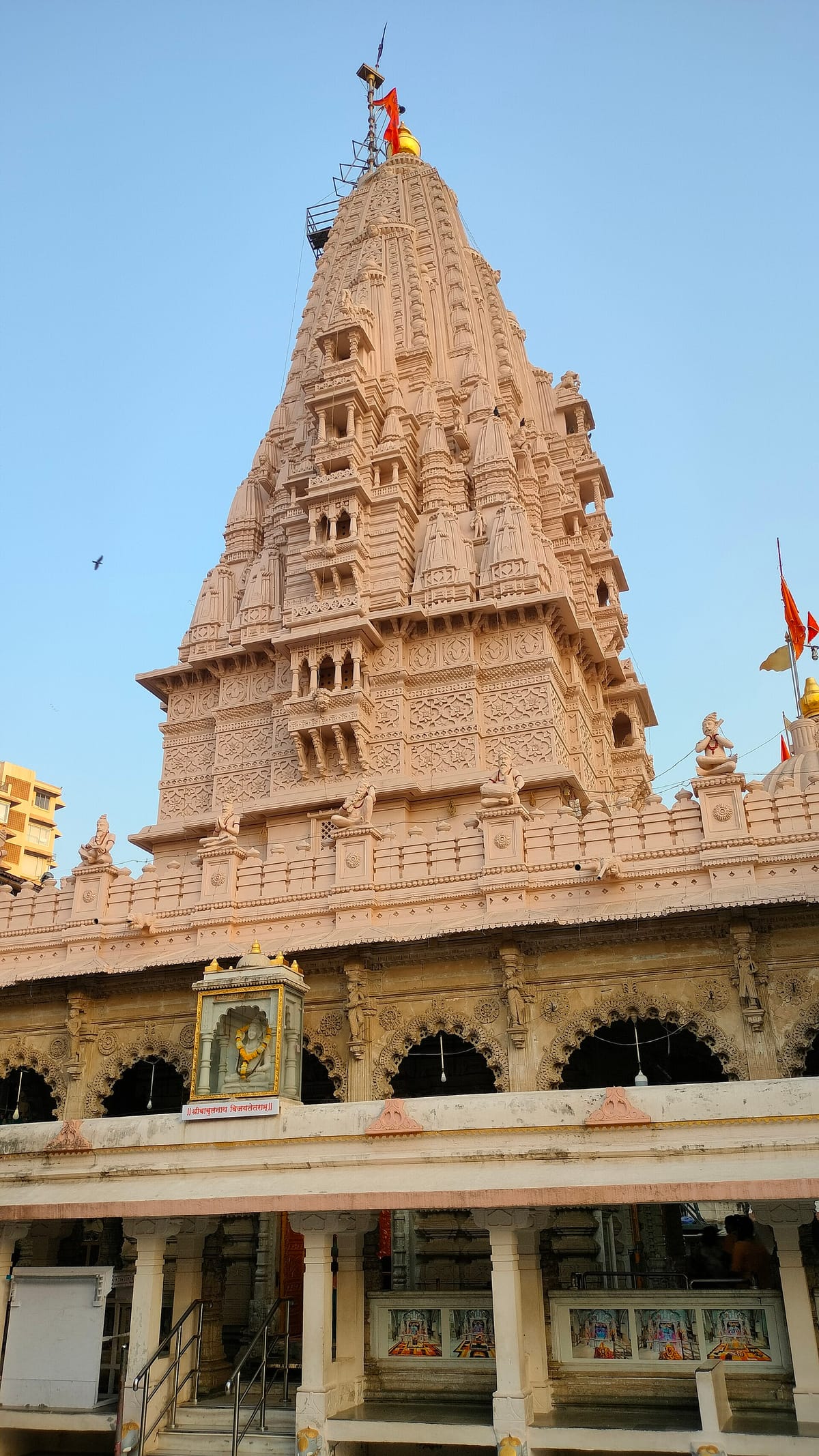
One of Mumbai's oldest Shiva temples, Babulnath sits majestically atop a small hill in Girgaon, offering stunning views of Marine Drive, the Arabian Sea, and the city skyline. Dating back nearly 800 years, this temple is named after the babul trees that once blanketed the hillside. The daily milk abhishek and Monday prayers draw thousands of devotees every week.
History & Significance
Babulnath is one of Mumbai's oldest and best-loved Shiva temples, standing halfway down the south-east slope of Malabar Hill above Girgaon Chowpatty. The Gazetteer of Bombay City and Island records two accounts of the name side by side: that the temple took it from the man who built the original shrine around 1780, or that he was a cowherd — Babul — whose cow was found emptying her milk over a spot on the hill where a self-formed Shiva lingam was then discovered. Older tradition pushes the site back further still, to the Hindu rule of these islands before the Portuguese. The name is also read as coming from the babul (acacia) trees that once covered the slope. The temple was substantially restored in 2016. Come at Maha Shivaratri and the steps are climbed through the night.
Highlights
- Centuries-old Shiva temple on a small hill above Girgaon Chowpatty
- Sweeping views toward Marine Drive and the Arabian Sea
- Daily abhishek of the Shiva lingam with water and bilva leaves
- Reached by about 108 historic stone steps — a lift has also been installed
- Huge Maha Shivaratri gatherings drawing lakhs of devotees
Through the Lens
A closer look at Babulnath Temple
Real, free-licensed photographs of Babulnath Temple — tap any image to view it full-screen.
Before You Go
Visitor tips
A few things worth knowing before you visit Babulnath Temple.
- Climb the roughly 108 stone steps for the traditional pilgrimage feel — allow more time than the number suggests
- A lift has been installed for those who cannot climb, but its hours are not published — phone ahead if someone in your group depends on it
- Mondays are Shiva's day and the busiest; Shravan Mondays busier still
- Devotees may offer water and bilva leaves — milk has been restricted for devotees since the COVID period
- Early morning (5–7 AM) is peaceful, with a cool sea breeze on the upper terrace
Plan Your Darshan
Aartis, trains & the right day
Aarti Schedule
| Morning aarti | ≈ 5:30 – 6:30 AM |
| Madhyan (noon) aarti | ≈ 11:30 AM – 12:30 PM |
| Sandhya aarti | ≈ 5:30 – 6:30 PM |
| Shej aarti | ≈ 7:45 – 8:15 PM |
Commonly published schedule — timings shift on festival days; we confirm on the day of your tour.
Nearest Stations
| Charni Road (Western) | ≈ 1 km |
| Grant Road (Western) | ≈ 1.5 km |
Crowd Calendar
Best time: Early mornings (5–7 AM), with the sea breeze on the upper terrace
Busiest: Maha Shivaratri (the temple runs through the night) and Shravan Mondays (Jul–Aug), when lakhs climb the steps
Quick Answers
Frequently asked questions
How many steps are there at Babulnath, and is there a lift?
About 108 on the main flight — the figure given both by the temple trust and by the city's heritage record, and a sacred number in its own right. Some first-hand accounts describe the full climb as longer, because the approach includes landings and further steps inside the complex, so plan for it to feel longer than 108. A lift has been installed for those who cannot climb, and the temple has run separate queues for senior citizens and specially abled devotees on major festival days.
Can an elderly person manage Babulnath?
Usually yes — but honestly, only because of the lift, and you should confirm the lift is running on the day. The stair climb on its own is a real climb and is not suitable for anyone with cardiac, respiratory, knee or balance problems. The lift is documented by the temple trust itself, but its operating hours are published nowhere and we could not verify whether it runs during major festivals. If someone in your group depends on it, phone the temple office that morning. We will not promise you step-free access to a hilltop temple we do not run.
Can I offer milk on the Babulnath lingam?
Not as a devotee, currently. Milk offerings by devotees were stopped during the COVID period and the restriction was kept rather than lifted; priests may still use milk during rituals. Water remains permitted, along with bilva leaves and flowers. It is worth checking on the day, as practice at any temple can change.
What happens at Babulnath on Maha Shivaratri?
The temple is grandly decorated and stays open through the night as lakhs of devotees climb the steps for darshan of the lingam. Expect queues of several hours — or visit in the quieter days just before the festival.
What is the nearest station to Babulnath temple?
Charni Road on the Western Line, about 1 km away. From Girgaon Chowpatty the temple lane is a short walk inland — our tours drop you at the base of the steps (or the lift).
Why is Monday the day for Shiva?
Somvar, Monday, is traditionally held to be Shiva's day, and Mondays in the month of Shravan (roughly July–August) are the most significant of all — that is when the steps here are fullest. If you want the temple at its most alive, come on a Shravan Monday. If you want it quiet, come on any other weekday morning.
What is a Shiva lingam, and what does it represent?
The lingam is the aniconic form in which Shiva is worshipped — a form deliberately without human likeness, understood in the tradition as a symbol of the formless, infinite reality, with the base representing the inseparable energy through which it acts. The crude sexual reading circulated online is rejected by most Hindu traditions and contested by many scholars. Babulnath's lingam is held to be swayambhu — self-formed rather than carved, which is what gives the site its standing.
Is Babulnath one of the twelve Jyotirlingas?
No. The twelve Jyotirlingas are a separate and specific set of Shiva shrines across India — Maharashtra has several, including Bhimashankar, Trimbakeshwar, Grishneshwar and Aundha Nagnath, but Babulnath is not among them. It is a major and much-loved Mumbai Shiva temple in its own right, which is a different claim and an honest one.
Is there an entry fee at Babulnath?
The trust publishes no entry fee. Poojas are arranged through the temple office and rates are not published, so ask there rather than agreeing a price with anyone who approaches you on the steps. Donations are voluntary.
Getting There
Find it on the map
Ready to visit Babulnath Temple?
Weave it into a private, chauffeur-driven Mumbai darshan — hotel pickup, an AC vehicle and door-to-door care from start to finish.