पवित्र मंदिर दर्शन
TempleISKCON Temple (Hare Krishna)
4:30 AM – 1:00 PM & ~4:15 PM – 9:00 PM (Daily)
Hare Krishna Land, Juhu, Mumbai – 400049
- Deity
- Sri Sri Radha Rasabihari
- Established
- 1978
- Entry
- Free
The Story
About ISKCON Temple (Hare Krishna)
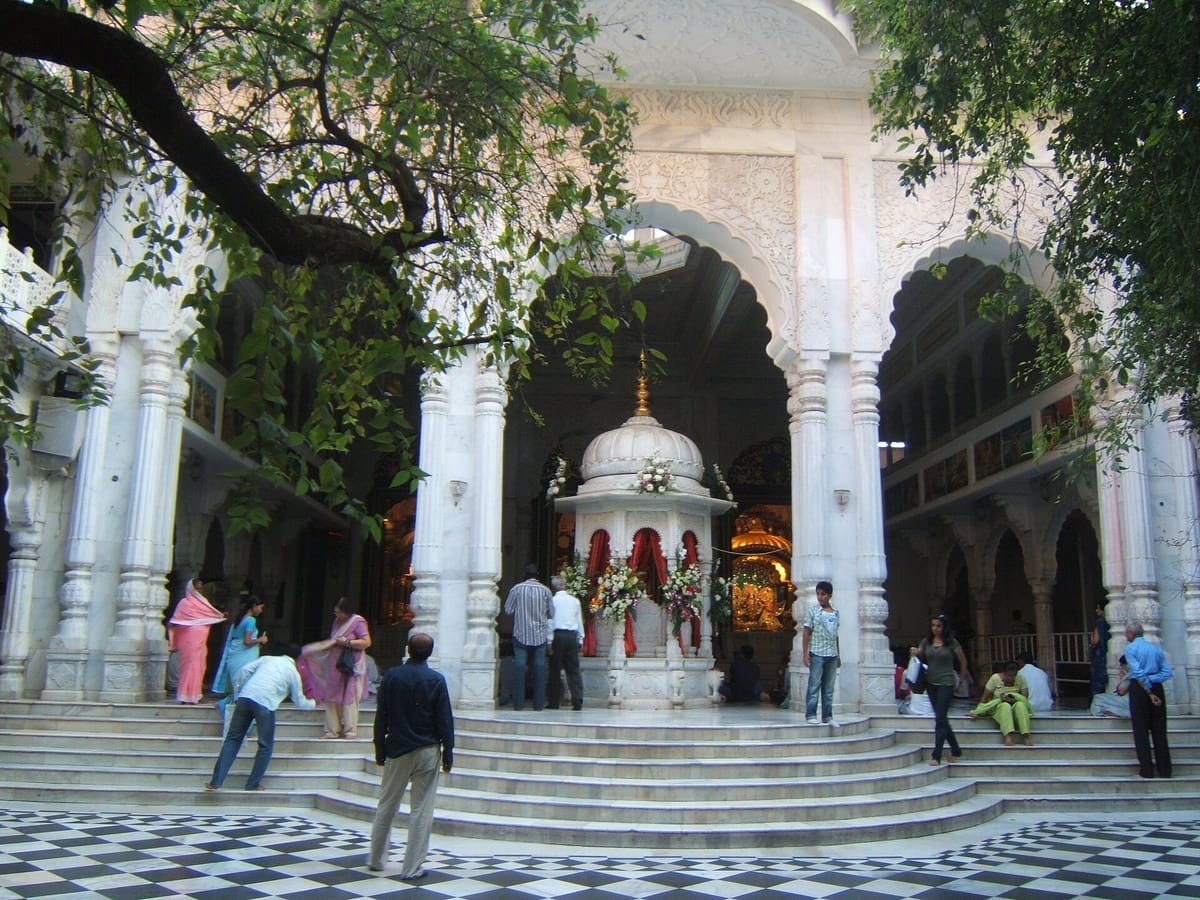
Established in 1978, the ISKCON Juhu temple is one of the most beautiful and largest Hare Krishna temples in the world. Set amid lush gardens near Juhu Beach, it features stunning marble architecture, magnificent deities of Radha Rasabihari, and a serene spiritual atmosphere. The world-famous Govinda's vegetarian restaurant and the joyful Sunday feast are highlights not to be missed.
History & Significance
This is the one temple on our routes that is not centuries old, and it earns its place anyway. It was built under A.C. Bhaktivedanta Swami Prabhupada, who had sailed to New York in 1965 at the age of sixty-nine with almost nothing, founded the International Society for Krishna Consciousness there in 1966, and came back to India to build. The Juhu land took years of legal struggle to hold on to, and he lived on the site through much of it. He died in November 1977 — about two months before the temple he had fought for opened in January 1978. The main deities, Sri Sri Radha Rasabihari, are counted among the loveliest Vaishnava deities in India, with side altars to Sita-Rama-Lakshmana-Hanuman and to Gaura-Nitai. The marble complex holds a guest house, a restaurant and halls, a few streets back from Juhu beach.
Highlights
- Sri Sri Radha Rasabihari — among the most beautiful Vaishnava deities in India
- Gleaming white-marble temple set over four acres near Juhu Beach
- Govinda's — a celebrated pure-vegetarian (sattvic) restaurant
- Joyful Sunday Love Feast with kirtan, a talk and a full meal — open to all
- Mangal Aarti at 4:30 AM and Sandhya Aarti at 7:00 PM
- Janmashtami is the temple's biggest night of the year — celebrations run past midnight, and Dahi Handi follows across Mumbai the next day
Through the Lens
A closer look at ISKCON Temple (Hare Krishna)
Real, free-licensed photographs of ISKCON Temple (Hare Krishna) — tap any image to view it full-screen.
Before You Go
Visitor tips
A few things worth knowing before you visit ISKCON Temple (Hare Krishna).
- Attend the Mangal Aarti at 4:30 AM for the most peaceful experience
- Don't come between 1 PM and about 4:15 PM — the altars close so the deities can rest
- Don't miss Govinda's restaurant — the thali and desserts are legendary
- The Sunday Love Feast includes kirtan, a talk and a full vegetarian meal — all welcome
- Easily the most relaxed of Mumbai's big temples for a first-time or non-Hindu visitor
Plan Your Darshan
Aartis, trains & the right day
Aarti Schedule
| Mangala aarti | 4:30 AM |
| Darshan aarti / guru puja | ≈ 7:15 AM |
| Sandhya aarti | 7:00 PM |
| Shayan aarti | ≈ 8:30 PM |
| Afternoon closure | 1:00 PM – ~4:15 PM daily |
Commonly published schedule — timings shift on festival days; we confirm on the day of your tour.
Nearest Stations
| Vile Parle (Western) | ≈ 2 km |
| Andheri (Western / Metro) | ≈ 4 km |
Crowd Calendar
Best time: Weekday mornings after mangala aarti, or 4:15–6 PM before the evening rush
Busiest: Sunday afternoons (Love Feast crowds) and Janmashtami (Aug), when queues wrap the campus
Quick Answers
Frequently asked questions
What are ISKCON Juhu temple timings today?
4:30 AM to 1:00 PM, then closed, reopening around 4:00–4:15 PM and running to 9:00 PM, every day of the year. Mangala aarti is at 4:30 AM and sandhya aarti at 7:00 PM. The temple's own pages give the reopening as both 4:00 and 4:15 PM, so plan for 4:15 rather than turning up at 4:00 sharp.
Why is ISKCON closed in the afternoon?
Because the deities are treated as persons rather than statues. After the midday offering they are put to rest, the altar curtains close, and they are woken for the Usthapana — the 'rising' aarti — in the late afternoon. Every traditionally run Vaishnava temple in India does this. It is not a staff lunch break and it is not negotiable, so a 2 PM arrival means no darshan. The grounds, shops and Govinda's stay open, and the lunch buffet runs into the early afternoon.
Is entry free at ISKCON Juhu?
Yes, entry and darshan are free. Govinda's restaurant, the guest house and the gift shop are paid facilities within the four-acre campus.
Does ISKCON Juhu have a restaurant?
Yes — Govinda's, a celebrated pure-vegetarian sattvic restaurant famous for its thali and desserts. It makes a natural lunch stop on our Gold package day.
Can non-Hindus and foreigners visit ISKCON Juhu?
Yes — emphatically, and this is the easiest of Mumbai's major temples for a first-time or non-Hindu visitor. The movement was built on the idea that anyone may take up the practice regardless of birth or nationality, the temple runs classes and tours for newcomers, and a great many of its devotees worldwide are converts. Nobody will mind you not knowing what to do.
Who are Radha and Krishna, and why is Radha named first?
Krishna is worshipped here not merely as an avatar of Vishnu but, in the Gaudiya Vaishnava tradition this temple belongs to, as the supreme personality of Godhead himself — a distinctive theological position most travel writing gets wrong. Radha is his foremost beloved, understood as the personification of devotion itself, the very energy by which he is loved. Her name comes first because in this tradition the way to approach him is through her devotion rather than around it.
What does 'Hare Krishna' actually mean?
It is the opening of the maha-mantra: Hare Krishna Hare Krishna, Krishna Krishna Hare Hare, Hare Rama Hare Rama, Rama Rama Hare Hare. It is an address rather than a request — calling on the divine energy (Hare) and on Krishna and Rama by name. The tradition holds that chanting the holy name is itself the practice, which is why you will hear kirtan here rather than watch elaborate ritual from a distance.
Is ISKCON a separate religion or part of Hinduism?
It is a Gaudiya Vaishnava organisation within Hinduism, following the 16th-century Bengali saint Chaitanya Mahaprabhu — the figure on the side altar as Gaura, and the reason the movement exists at all. What is unusual is not the theology but the delivery: a traditional Indian lineage that was formally organised in New York in 1966 and spread worldwide. Like any large religious organisation it has both wide acceptance and its critics.
Is it really only about 48 years old?
The building, yes — it opened in January 1978, which makes it a newcomer beside Mumbadevi or Babulnath. It ranks among the city's most-visited temples anyway, because it is clean, calm, welcoming to strangers, easy to reach, and feeds people. Worth knowing before you arrive expecting antiquity: what you get instead is a working, unusually accessible devotional community.
Getting There
Find it on the map
Ready to visit ISKCON Temple (Hare Krishna)?
Weave it into a private, chauffeur-driven Mumbai darshan — hotel pickup, an AC vehicle and door-to-door care from start to finish.